


Activity
The Emails page lists all the email messages that have been sent through your MailerSend account.
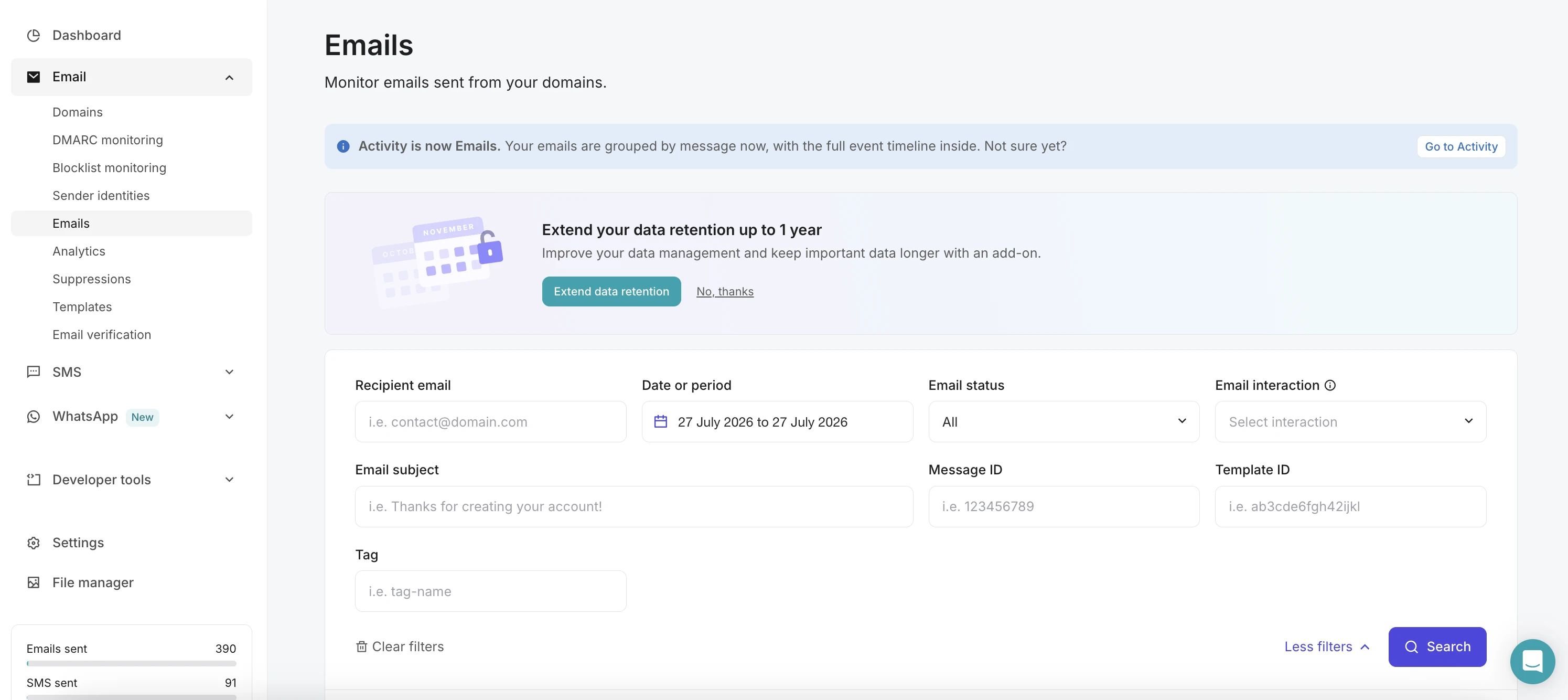
Use a filter to easily find the email message(s) you’re looking for.
These are the available filters:
Domain. The domain filter is available for customers that have more than one sending domain. This option is only visible when you have added more than one domain to your account.
Search by subject, recipient, message ID, template ID or tag. Every message sent through MailerSend has a subject, message ID and recipient email address. Enter any of these and click the search icon. If the email was sent using an email template, you can also search by template ID. You can also search by specific tags if you use tagging. To learn how to tag messages, read this article about email message tagging.
Date. You can filter your emails using a specific timeline. The default data filter is set to show logs for the past 7 days.
Status. The status option allows you to filter the activity list by different message states. For example, you can change the filter to only show email messages that bounced.
Email interaction. The email interaction option allows you to filter the list by how recipients engaged with the message, such as showing only emails that were opened or clicked.
When you send an email using an API request, the request is accepted and parsed by our servers. The email journey starts once it reaches our API server.
Each message goes through at least 4 steps before it's successfully delivered. You can track every step using the Status filter on the Emails page:
Queued. Your API request has been authorized and will be processed.
Sent. Your email was sent from our sending servers. We are now waiting for a response from the receiving servers.
Delivered. Your email was successfully delivered with no errors.
Rejected. Your email wasn't delivered. This covers several outcomes: the message hard bounced (the address is invalid or no longer exists), soft bounced (a temporary issue like a full inbox), or was blocked because the recipient is on your suppression list (suppression details on this page are available on Starter, Professional, and Enterprise plans). Hover over the (!) icon next to the Rejected badge to see the specific reason for that email. You can view and manage your suppression lists at any time from the Suppressions page, regardless of your plan.
Alongside message status, you can filter by how a recipient interacted with the email, using the Email interaction filter on the Emails page:
Opened. The recipient received your message and opened it. Opens tracking is only available if you enabled it in your domain settings.
Clicked. The recipient clicked a link that’s in your message. Likewise, clicks tracking is only available if you enabled it in your domain settings.
Unsubscribed. The recipient opted out of your emails using the unsubscribe link.
Complained. The recipient marked your message as spam.
No interaction. The recipient hasn't opened, clicked, unsubscribed, or complained about this email.
Export email activity
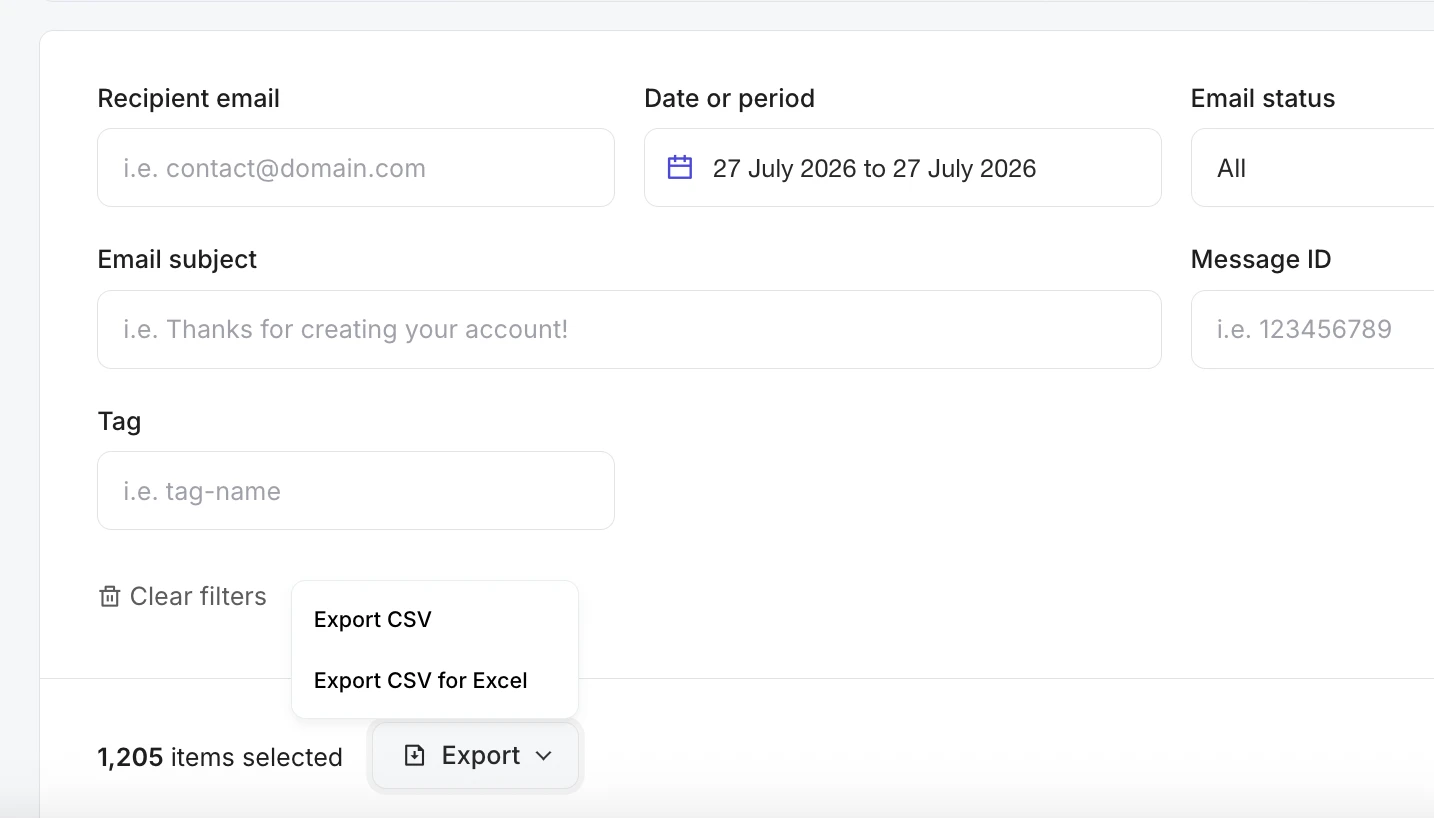
Once you have applied the desired filter, you can export a set of activities by clicking Export and selecting Export CSV or Export CSV for Excel.
Checking email message details
MailerSend’s Activity feature also allows you to retrieve more details about your sent messages.
To check an email message, click on the subject in the Activity list table. You will be presented with an Email activity page:
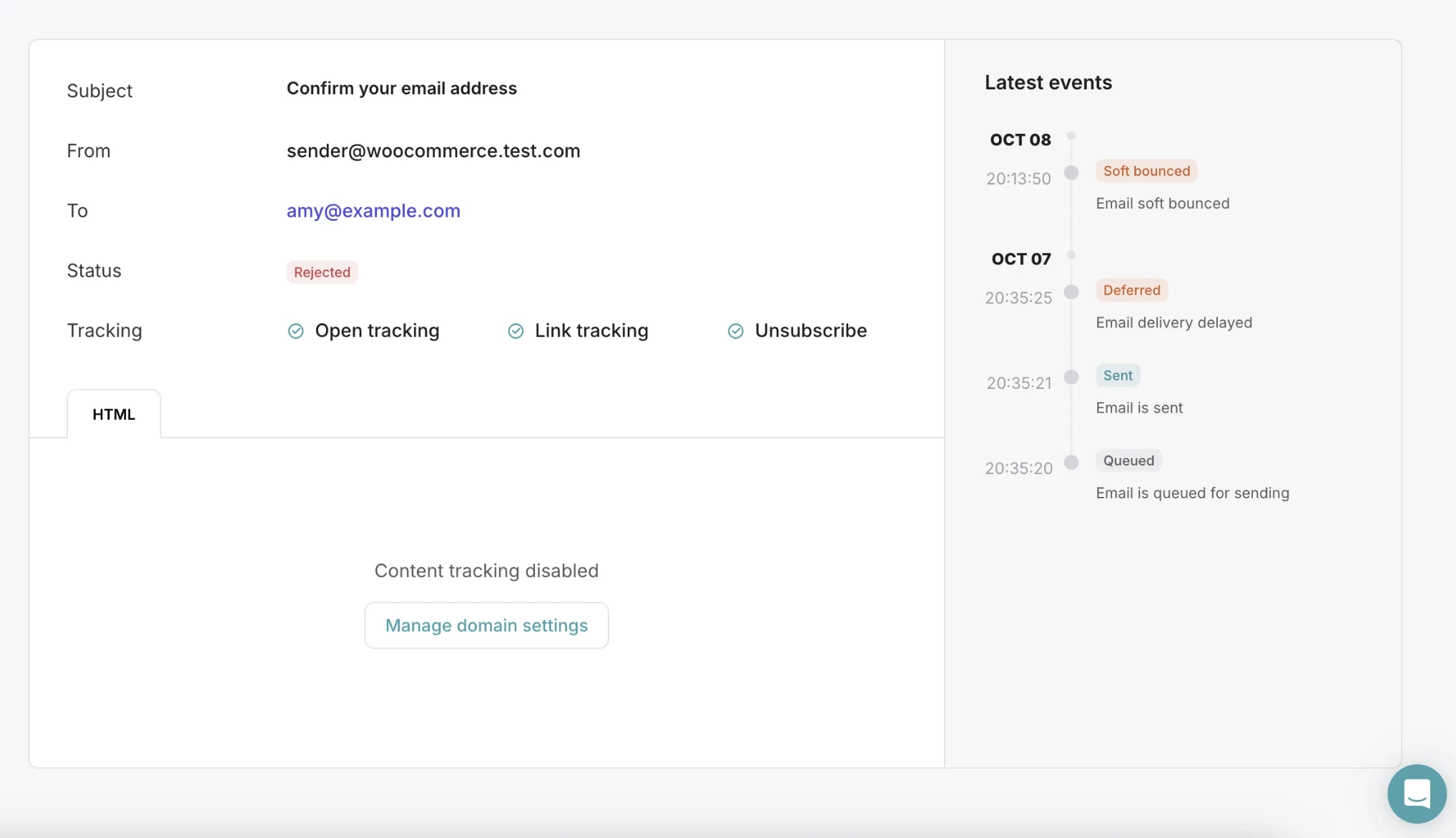
On this page, the most important information about your email message is shown:
Subject
From and to addresses
The final status of the message
Tracking options that are enabled
Also, if you’re sending an email from your application, you can check how the HTML version of your email looks. Plain text and raw versions are available, too.
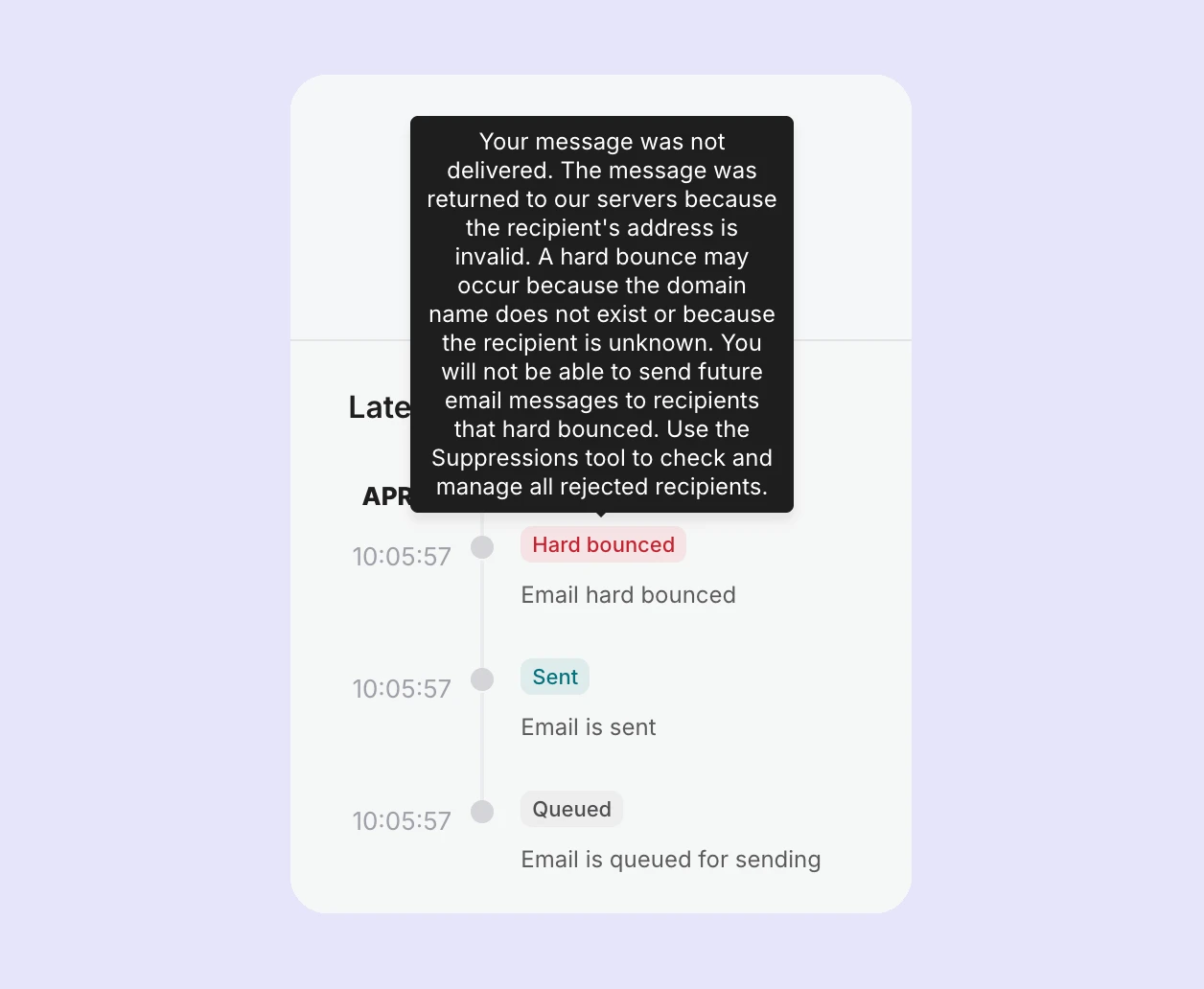
In the right sidebar, you can see the latest events: the time your message was delivered and whether it was opened. By hovering over a status in the message timeline, you can view an expanded message, giving further information about the status, for example, why the email hard bounced.
Recipient profile
In MailerSend, all email messages are sent to a recipient profile. You can also check what emails, and when, were sent to specific recipients. To do this, enter the recipient’s email address on the Emails page and apply the filter.
Once the results are listed, click on the recipient's email address in the Activity table. You will then be shown the Recipient activity page.
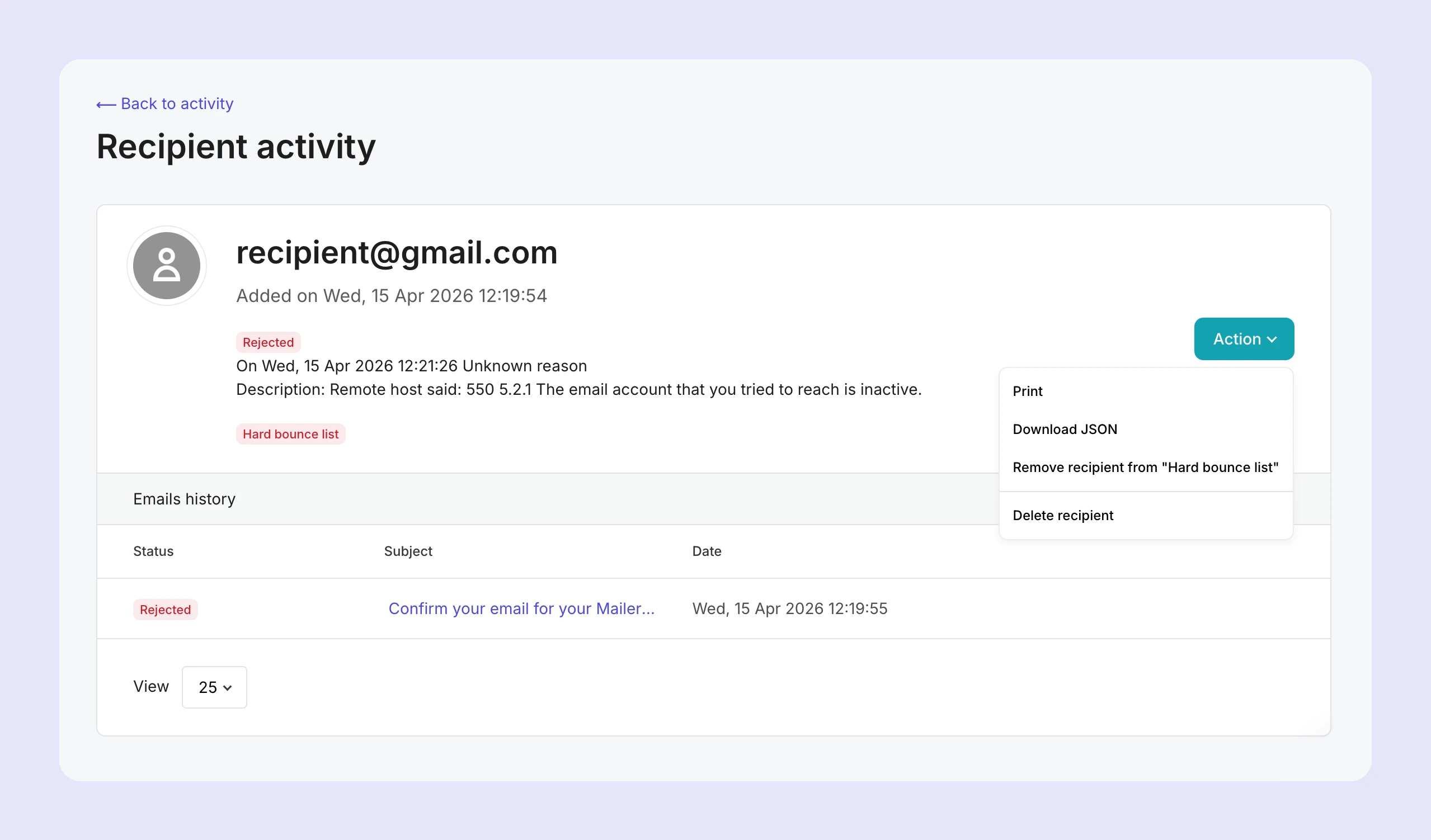
Here, you can see the full email history. If the last email sent to the recipient was rejected, you'll be able to view the full bounce reason returned by the mailbox provider, as well as the time and date of the email.
By clicking on the Action button, you can download the full JSON file of the message, remove the recipient from your suppressions list, or delete the recipient.
Need more info?
Please feel free to contact us at support@mailersend.com and a member of our support team will gladly assist you.